The NIE number (Número de Identidad de Extranjero) in Spain is one of the most important identification numbers for foreigners who have economic, professional or other interests in the country. It may be required when setting up a business, dealing with taxes, buying property, handling certain banking matters, or completing other administrative procedures. However, it is important to understand what an NIE is, who needs one, how to apply for it, and — just as importantly — what an NIE does not mean.
What Is an NIE in Spain?
NIE stands for Número de Identidad de Extranjero, which translates as Foreigner Identity Number. It is a personal, unique identification number assigned to foreign nationals who have economic, professional or social interests connected with Spain and need to be identified for administrative purposes. Having an NIE does not necessarily mean that you live in Spain. A person may need an NIE even if they are not a Spanish resident. For example, an NIE may be relevant if you:
- plan to set up a business in Spain;
- want to register as self-employed (Autónomo);
- plan to buy property in Spain;
- have economic interests in Spain;
- need to deal with Spanish tax matters;
- need to complete certain banking or administrative procedures.
Who Can Get an NIE in Spain?
Yes, foreign nationals can apply for an NIE in Spain. The NIE is specifically a foreigner’s identification number, and Spanish citizens use a different identification system. According to Spanish official information, an NIE can be assigned to foreigners who have economic, professional or social interests in Spain and need an identification number for activities connected with the country. This means that a Lithuanian citizen, for example, may apply for an NIE if they have a valid reason connected with Spain. The important point is that you do not necessarily have to move to Spain permanently in order to need an NIE.
What Is an NIE Used For in Spain?
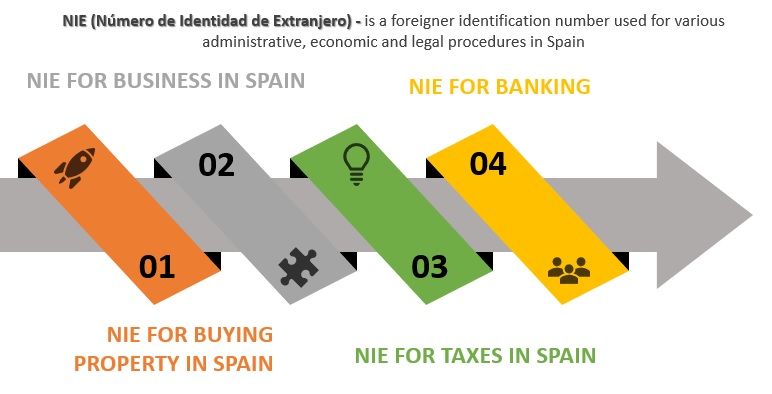
NIE for Business in Spain, If you are planning to:
- establish an S.L. (Sociedad Limitada);
- register as an Autónomo;
- carry out business or other economic activities;
- deal with Spanish tax authorities;
an NIE may be an important part of the process. For foreign entrepreneurs, obtaining an NIE is therefore often one of the first administrative matters to consider when planning to do business in Spain.
NIE for Buying Property in Spain, An NIE is also particularly relevant to foreigners who want to buy property in Spain. The number may be required when completing property-related transactions and dealing with the associated administrative and tax procedures. If you are planning to purchase an apartment, house or other real estate in Spain, it is worth checking the NIE requirements before starting the transaction.
NIE for Banking, An NIE may also be required for certain banking or financial procedures in Spain. However, individual banks can have their own requirements, so it is always advisable to check directly with the relevant bank which documents are needed for your specific situation.
NIE for Taxes in Spain, The NIE is an important identification number in various Spanish tax and administrative procedures. For this reason, foreigners who plan to have ongoing economic or financial relationships with Spain often need to obtain an NIE early in the process.
Is an NIE the Same as Spanish Residency?
No. This is one of the most important distinctions to understand. An NIE is an identification number, not a residence permit. Obtaining an NIE does not, by itself, give you the right to live in Spain or prove that you are a Spanish resident. Spanish official guidance expressly distinguishes the NIE from residence status. The rules governing the right to live in Spain depend on your nationality and individual circumstances. For example, EU citizens who establish residence in Spain have separate registration requirements.
Does an NIE Give You the Right to Work in Spain? No — not automatically. An NIE identifies a foreign national for administrative purposes, but the number itself is not a work permit. Whether you have the right to work in Spain depends on your immigration and legal status and the rules applicable to your particular situation. This distinction is especially important for non-EU nationals.
How to Get an NIE in Spain
Applying for an NIE is an official administrative procedure. Depending on your circumstances, you will generally need to:
- complete the NIE application;
- provide a reason demonstrating your economic, professional or social connection with Spain;
- provide the required identification documents;
- complete the relevant administrative procedure;
- pay the applicable government fee.
The exact documentation and procedure can vary depending on where you apply and the reason for requesting the NIE. The standard application form is EX-15, and the application must state the economic, professional or social reasons for requesting the NIE. Official consular information also refers to the applicable fee form, Modelo 790, Código 012. NIE numbers are assigned by the Spanish authorities under the responsibility of the Spanish National Police. Because administrative requirements can change, it is important to check the current requirements with the relevant Spanish authority or consulate before submitting an application.
Can You Get an NIE While Outside Spain?
Yes, in certain circumstances. An NIE can be requested directly in Spain or through the Spanish Consular Office in the applicant’s country of residence. Applications may be made personally or, where permitted, through an appropriately authorised representative. The exact procedure depends on where you live and your individual circumstances. If you are applying from Lithuania, for example, the Embassy of Spain in Vilnius provides specific information about applying for an NIE through its Consular Section. Before starting the process, it is therefore worth checking:
- where you should submit the application;
- whether an appointment is required;
- which documents you need;
- how the applicable fee must be paid;
- whether you can apply through a representative.
NIE and Setting Up a Company in Spain
If you are planning to set up a company in Spain, the NIE is an important issue to consider at an early stage. One of the first decisions is usually choosing the appropriate business structure, such as:
- S.L. – Sociedad Limitada (limited liability company);
- Autónomo – self-employed individual.
Once the business structure has been chosen, the required documentation and registration procedures can be assessed. For a foreign entrepreneur, the NIE is therefore often one of the first administrative matters to resolve before starting the company formation process.
NIE in Tenerife – If you are planning to do business in Spain and, more specifically, set up a company in Tenerife, the NIE can also be one of the first practical issues to address. Tenerife is part of Spain, so Spanish legislation applies. However, the Canary Islands have a distinct tax framework, including IGIC (Impuesto General Indirecto Canario) and other specific tax rules. This means that setting up a business in Tenerife may involve additional tax considerations compared with mainland Spain. For this reason, obtaining an NIE is only one part of the process. The appropriate business structure, tax obligations and registration requirements should also be assessed based on the planned activity.
Frequently Asked Questions About the NIE in Spain
Can a Lithuanian citizen get an NIE in Spain?
Yes. A Lithuanian citizen can apply for an NIE if they have an economic, professional or social interest connected with Spain and meet the relevant requirements.
Is an NIE the same as Spanish residency?
No. An NIE is a foreigner identification number. It does not itself grant Spanish residency or prove residence in Spain.
Does an NIE give you the right to work in Spain?
No. An NIE is an identification number, not a work permit. The right to work depends on your legal and immigration status.
Do I need an NIE to set up a company in Spain?
An NIE is an important identification number for foreign nationals and may be required for company formation and related tax or administrative procedures. The exact requirements depend on the business structure and circumstances.
Can I get an NIE without being in Spain?
In certain circumstances, yes. An NIE can be requested in Spain or through a Spanish Consular Office in the applicant’s country of residence. The exact procedure depends on the applicant’s circumstances and where the application is submitted.
Do I need an NIE to buy property in Spain?
An NIE is commonly required for foreigners carrying out property transactions in Spain and for related administrative and tax procedures.
NIE: An Important First Step for Doing Business in Spain
If you are planning to start a business, buy property or carry out other economic activities in Spain, it is worth preparing the required documentation in advance. An NIE is not Spanish residency and does not automatically give you the right to live or work in Spain. However, it is an important identification number for many foreigners who need to deal with Spanish administrative, financial, tax or business matters. If your goal is to set up a company in Spain or Tenerife, obtaining an NIE may be one of the first practical steps to consider before starting the wider process.
If you are unsure where to begin, get in touch with AssistPRO. We can help you assess which steps and documents may be required for your particular situation.
The information in this article is provided for general informational purposes only and does not constitute individual legal or tax advice. Administrative procedures and requirements may change, so you should check the latest official information before submitting an application.