Company formation in Tenerife is attracting increasing interest from entrepreneurs who want to do business in Spain while benefiting from the Canary Islands’ unique economic and tax environment. Tenerife is part of Spain and the European Union, but the Canary Islands have a special tax system that differs from mainland Spain in several important ways. This makes Tenerife an interesting option for certain types of businesses, particularly international entrepreneurs, online businesses, service companies and companies that can meet the requirements of special tax regimes. However, setting up a business in Tenerife is not simply a matter of registering a company and automatically paying less tax.
Your tax position depends on factors such as your business activity, company structure, customers, where the business is actually carried out and whether you qualify for specific regimes such as the Canary Islands Special Zone (ZEC).
Why Establish a Company in Tenerife?
Tenerife offers more than a favourable climate and attractive lifestyle. For entrepreneurs, the island can provide several practical advantages:
- a Spanish and EU legal framework;
- access to the European market;
- an international business environment;
- a special tax system for the Canary Islands;
- IGIC instead of mainland Spain’s VAT (IVA);
- potential access to special tax incentives;
- an established infrastructure for international business.
However, it is important to understand that Tenerife is not simply a low-tax version of mainland Spain. The tax advantages available to a business depend on its particular circumstances. For example, two companies operating from Tenerife may have very different tax positions because they have different activities, customers, turnover, employees or business structures. This is particularly important if you are considering the ZEC regime, as it has specific eligibility requirements.
Company Formation in Tenerife: S.L. or Autónomo?
If you want to start a business in Tenerife, one of the first decisions is choosing the appropriate legal structure. The two most common options are:
- Autónomo – self-employed individual;
- S.L. (Sociedad Limitada) – Spanish limited liability company.
Autónomo in Tenerife – Operating as an Autónomo can be suitable for individuals who provide services independently. It may be an appropriate structure for:
- freelancers;
- consultants;
- individual professionals;
- online service providers;
- smaller businesses operated by one person.
The structure is generally simpler than incorporating an S.L., although the actual costs, tax position and social security obligations should be assessed based on the individual’s circumstances.
S.L. in Tenerife – An S.L. (Sociedad Limitada) is a Spanish limited liability company. It may be more appropriate when you are planning:
- a larger business;
- several shareholders;
- employees;
- e-commerce;
- international operations;
- significant commercial activity;
- future investment or expansion.
For foreign entrepreneurs, establishing an S.L. can also provide a more conventional corporate structure when dealing with international clients, suppliers and business partners.
The best option depends on your business model rather than simply on the tax rate.
What Is IGIC in Tenerife?
One of the most important differences between Tenerife and mainland Spain is the system of indirect taxation. The Canary Islands use IGIC – Impuesto General Indirecto Canario, or Canary Islands General Indirect Tax. Mainland Spain uses IVA (VAT), while the Canary Islands have their own indirect tax system. IGIC applies to certain supplies of goods and services in the Canary Islands and to certain imports. The general IGIC rate is 7%, although other rates, exemptions and special rules can apply depending on the product, service or transaction. This means that you should not simply assume that every invoice issued by a Tenerife company will include 7% IGIC. The applicable treatment depends on the specific transaction and the location of the parties involved.
IGIC vs VAT in Spain – The basic distinction is:
- IGIC applies in the Canary Islands;
- IVA (VAT) generally applies in mainland Spain and the Balearic Islands.
The standard IVA rate in mainland Spain is 21%, while the general IGIC rate is 7%. However, comparing only these two percentages can be misleading because both systems include different rates, exemptions and special rules.
Why IGIC Matters When Starting a Business in Tenerife
IGIC can affect much more than the amount shown on an invoice. It can influence:
- pricing;
- invoicing;
- accounting;
- tax returns;
- cash flow;
- imports;
- transactions with customers outside the Canary Islands;
- the amount of tax your business ultimately pays or recovers.
For this reason, IGIC should be considered before starting commercial activity, not after the company has already been established. A business selling physical products, providing local services and an online company selling internationally may all have very different IGIC considerations.
Corporate Tax for Companies in Tenerife
An S.L. established in Tenerife is generally subject to Spanish Corporate Income Tax (Impuesto sobre Sociedades). The applicable corporate tax rate depends on the company’s circumstances and the tax regime under which it operates. For tax periods beginning in 2026, the general rate is 25%, while certain smaller companies and newly established companies may qualify for different rates under the applicable Spanish tax rules. There are also special rules for qualifying companies operating under the ZEC regime. This is why it is not accurate to say that every company in Tenerife pays the same corporate tax rate. Your effective tax position depends on the structure and circumstances of the business.
What Is ZEC in Tenerife?
ZEC – Zona Especial Canaria, or the Canary Islands Special Zone, is a special tax regime designed to encourage investment, economic activity and employment in the Canary Islands. It is one of the reasons why Tenerife company formation can be particularly interesting for certain businesses. One of the main benefits of ZEC is the possibility of applying a 4% Corporate Income Tax rate to the qualifying portion of the taxable base attributable to activities covered by the regime. However, there is an important distinction: The 4% ZEC rate does not apply automatically to every company in Tenerife. A company must meet the relevant requirements and obtain the necessary authorisation to benefit from the regime.
Who Can Benefit From the ZEC Regime? ZEC is not designed for every type of business. Eligibility depends on several factors, including:
- the type of business activity;
- the company’s actual presence in the Canary Islands;
- investment requirements;
- employment requirements;
- the company’s management and operations;
- registration and authorisation under the ZEC regime.
ZEC also has a list of qualifying activities. Therefore, before establishing a company specifically to benefit from the 4% rate, you should first determine whether your business activity actually qualifies.
Is ZEC Suitable for Every Business in Tenerife? No. This is one of the most important points for anyone researching company formation in Tenerife. The fact that your company is registered in Tenerife does not automatically make it a ZEC company. A business may need to satisfy specific conditions relating to its activity, investment, employment and actual operations in the Canary Islands. For some entrepreneurs, a standard S.L. structure may be the most practical solution. For others, particularly companies carrying out qualifying activities with a genuine operational presence in the Canary Islands, ZEC can be a significant part of the overall business and tax structure. The right approach is therefore to assess the business first and the tax regime second.
Can a Foreigner Establish a Company in Tenerife?
Yes. Foreign nationals can establish businesses in Spain, including Tenerife, subject to the applicable Spanish legal and administrative requirements. For a foreign entrepreneur, one of the first practical issues is usually obtaining an NIE (Número de Identidad de Extranjero). The NIE is a foreigner’s identification number used in various economic, professional and administrative procedures in Spain.
It may be relevant when:
- incorporating a company;
- dealing with Spanish tax authorities;
- opening certain bank accounts;
- signing contracts;
- buying property;
- carrying out other business-related procedures.
An NIE is an identification number. It is not, by itself, a residence permit or a work permit.
What Does Company Formation in Tenerife Involve?
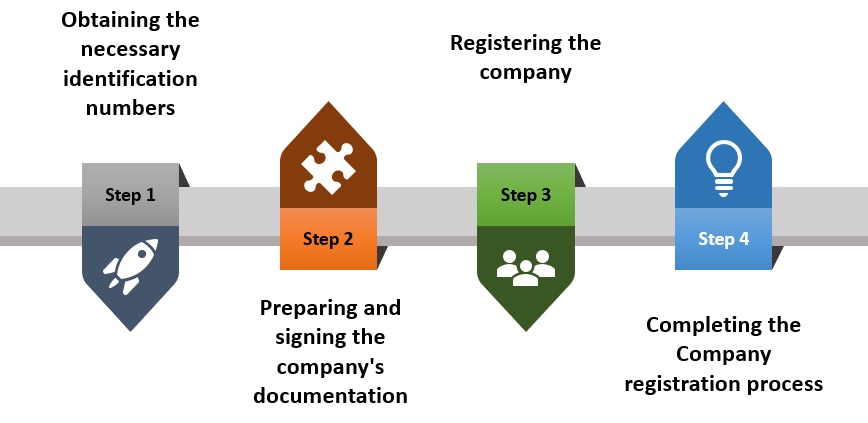
The exact process depends on whether you choose an S.L., Autónomo or another structure. For an S.L., the process can include:
- choosing the appropriate company structure;
- obtaining the necessary identification numbers;
- choosing and reserving a company name;
- preparing the company’s documentation;
- opening a corporate bank account where required;
- signing the incorporation deed;
- registering the company;
- completing the relevant tax registrations;
- registering for IGIC where applicable;
- completing any required Social Security registrations;
- assessing whether the business qualifies for special regimes such as ZEC.
The process can become more complex when the business has:
- international customers;
- foreign shareholders;
- employees;
- imports or exports;
- e-commerce;
- intellectual property;
- cross-border transactions.
For this reason, it is usually better to determine the intended business structure and tax treatment before incorporating the company.
Frequently Asked Questions About Company Formation in Tenerife
Can I establish a company in Tenerife?
Yes. Tenerife is part of Spain, and foreign entrepreneurs can establish a Spanish company there, including an S.L., subject to the applicable requirements.
Is Tenerife a tax-free place for companies?
No. Tenerife is part of Spain and businesses are subject to Spanish and Canary Islands tax rules. However, the Canary Islands have a special tax framework that can provide advantages for certain businesses.
Does Tenerife use VAT?
The Canary Islands use IGIC rather than mainland Spain’s IVA system. The general IGIC rate is 7%, although other rates and exemptions may apply depending on the transaction.
Is IGIC always 7%?
No. 7% is the general rate, but IGIC has other rates and specific rules depending on the goods or services involved.
Do all companies in Tenerife pay 4% corporate tax?
No. The 4% rate is associated with the ZEC regime and is available only to qualifying companies that meet the relevant requirements. It is not the standard corporate tax rate for every company established in Tenerife.
Can every business apply for ZEC?
No. ZEC has specific eligibility requirements and an authorised list of activities. Investment, employment and genuine economic activity in the Canary Islands can also be relevant.
Can a Lithuanian citizen establish a company in Tenerife?
Yes. A Lithuanian citizen can establish a business in Spain, including Tenerife, subject to the applicable Spanish procedures. The appropriate structure—such as Autónomo or S.L.—depends on the business model and individual circumstances.
Is Tenerife a good place to start a business?
Tenerife can be an attractive location for certain businesses because of its Spanish and EU legal framework, international environment and special Canary Islands tax system. However, the potential advantages depend on the type of business and how it is structured.
Is Company Formation in Tenerife Right for Your Business?
Tenerife can offer interesting opportunities for entrepreneurs who want to establish a business in Spain while operating within the Canary Islands’ special economic and tax framework.
However, the most important decision is not simply where to register the company. You should first understand:
- which legal structure is appropriate;
- how IGIC will apply;
- which Corporate Income Tax rules will apply;
- whether ZEC is available;
- where the actual business activity will take place;
- where your customers and employees are located;
- what your long-term plans are.
For some businesses, a standard S.L. may be the most suitable option. For others, Autónomo may be more appropriate. And for qualifying companies, the ZEC regime may provide significant tax advantages. The key is to choose the structure based on the actual business rather than simply choosing the lowest headline tax rate.
Planning to Establish a Company in Tenerife?
If you are considering company formation in Tenerife, we can help you assess your business model, determine which structure may be appropriate and identify the main administrative and tax considerations before you start the incorporation process.
Contact AssistPRO to discuss your plans and find out which business structure may be suitable for your situation.